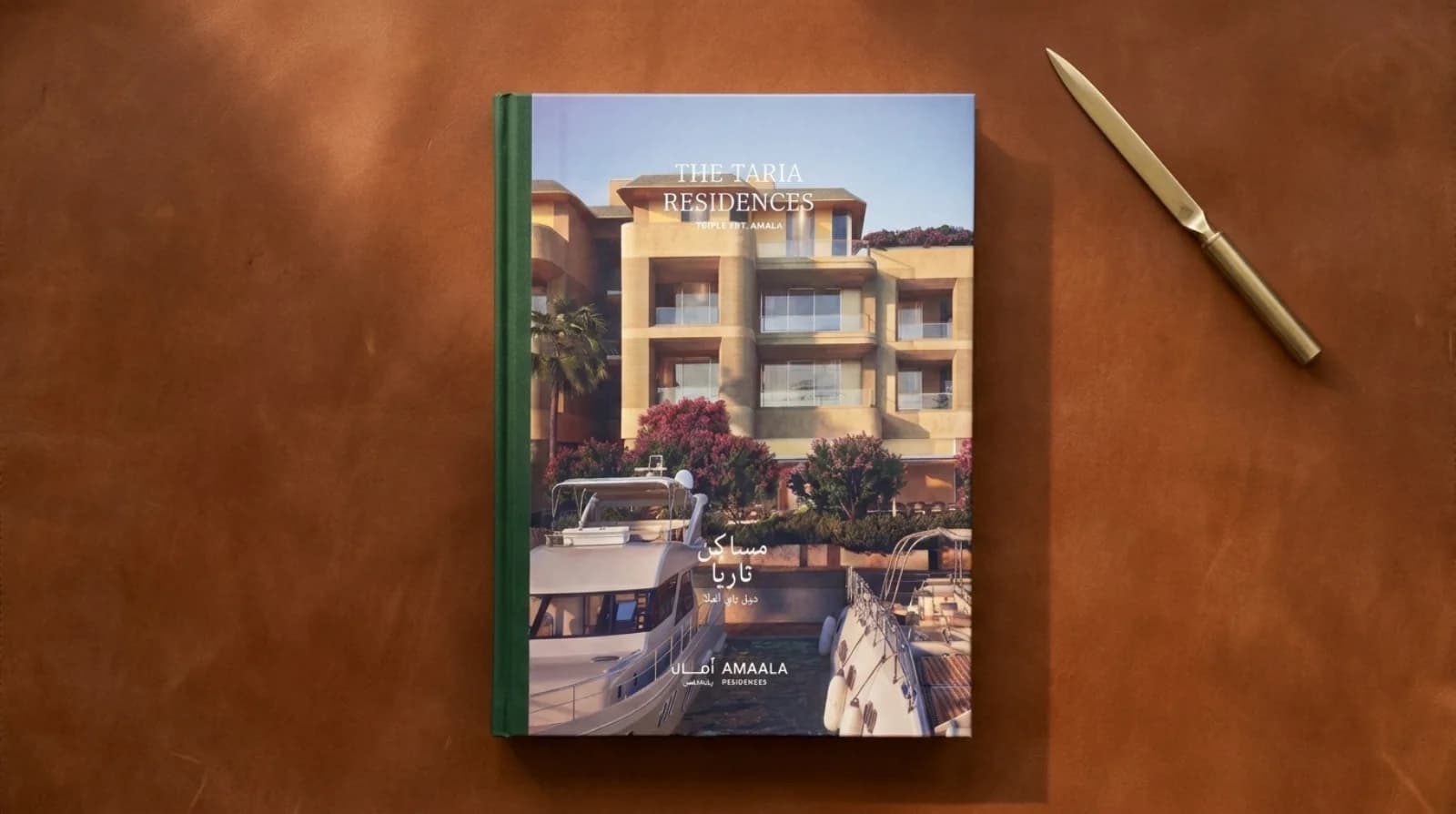
Offset printing and digital printing can produce the same brochure, book or invitation. What differs is how the cost behaves as the quantity grows, how exactly your brand colours land, which papers and finishes are open to you, and whether every copy can carry a different name. Below: each of those for Saudi buyers, a decision table by product and a press-ready checklist.
The short answer: a few hundred copies or fewer, a different name on every copy, or content that changes often: digital. Thousands of identical copies, an exact Pantone or metallic brand colour, or a heavy, textured paper: offset. In between, get both quoted on the same specification.
How offset printing works
Offset is a lithographic process. The artwork is imaged onto aluminium plates, one per ink. Each plate passes its ink to a rubber blanket, and the blanket “offsets” it onto the paper. Full colour needs four plates (cyan, magenta, yellow, black) per side, and every spot colour adds a plate and a printing unit.
Before the first good sheet, the operator mounts the plates, balances ink and water, and runs make-ready sheets until colour and registration are right. That setup costs the same for 500 copies as for 50,000. After it, each extra sheet costs very little, and a large sheet-fed press (a B1 sheet, 70 × 100 cm) prints a whole 16-page A4 section, eight pages a side, in one pass.
How digital printing works
A digital press prints straight from the PDF, with no plates, so the first copy needs almost no setup. The flip side: the cost per copy stays roughly flat however many you print, and most digital presses run a smaller sheet (around SRA3, two A4 pages a side), so long documents take many more passes. Because every sheet is imaged from scratch, every sheet can also be different: a name, number or QR code per copy, which offset cannot do at all.
Offset vs digital at a glance
| Factor | Offset | Digital |
|---|---|---|
| Setup | Plates and make-ready on every job | Practically none |
| Cost per copy | Falls steeply with quantity | Roughly flat |
| Natural run length | Hundreds to tens of thousands | One copy to a few hundred |
| Brand colour | True Pantone, metallic and fluorescent inks | Pantone simulated from CMYK |
| Paper | Almost any stock, thin to heavy board | Stocks approved for the press |
| Personalisation | None, every copy is identical | Every copy can differ |
| A change mid-run | New plates | Swap the file |
Where the break-even falls
Offset is a fixed setup plus a small amount per copy. Digital is almost no setup plus a larger, steady amount per copy. Draw both lines and they cross: below the crossing digital is the better buy, above it offset is, and the gap widens with every extra thousand.
The crossing moves with format, page count, paper and inks. Multi-page documents switch earlier than single sheets, because one offset sheet carries sixteen A4 pages while a digital press prints two to four at a time. As a starting point, not a rule:
| Job | Digital usually wins | Quote both | Offset usually wins |
|---|---|---|---|
| Flyers, leaflets, folded brochures | Under 500 | 500 to 2,000 | Over 2,000 |
| Stapled brochures, company profiles (16 to 48 pages) | Under 300 | 300 to 1,000 | Over 1,000 |
| Annual reports and books (60 pages and up) | Under 200 | 200 to 500 | Over 500 |
| Invitations, certificates, name cards | Any quantity, if personalised | Offset shell, digital names | Large identical runs in Pantone or metallic |
One consequence buyers miss: offset charges the setup again on every reprint, so one run of the year’s quantity usually beats three small reprints. Digital rewards the opposite habit: print what you need now, update the file before the next batch.
Colour: CMYK, Pantone and brand colours
Both methods build most colours from four process inks. The difference is brand colour. Offset can print a Pantone colour as its own pre-mixed ink on its own plate, so the green in your annual report matches your brand guidelines sheet after sheet. Metallic gold and silver, fluorescents and very saturated oranges and blues are only truly reachable this way.
Digital presses simulate Pantone from CMYK, and many land close; some add stations for white, clear, gold or silver. But a deep corporate blue or a true metallic will shift. If a brand colour is non-negotiable, print offset with the spot ink, or approve a digital proof of that colour on the final paper first.
Matching across reprints: ask which colour standard the printer works to (ISO coated profiles such as FOGRA39 or FOGRA51 are common), export your PDF to it, and keep a signed proof on file. The next run is matched to the proof, not the screen.
Paper and finishing
Offset takes almost any stock: light text paper for long reports, uncoated and textured papers for premium profiles, heavy board for covers and invitations. Ink soaks into uncoated paper and gives the soft, matte look premium brands want. Digital is limited to stocks approved for the press, and toner sits on top of the paper, so it can show a slight sheen on uncoated stock and crack along a fold unless the sheet is creased first.
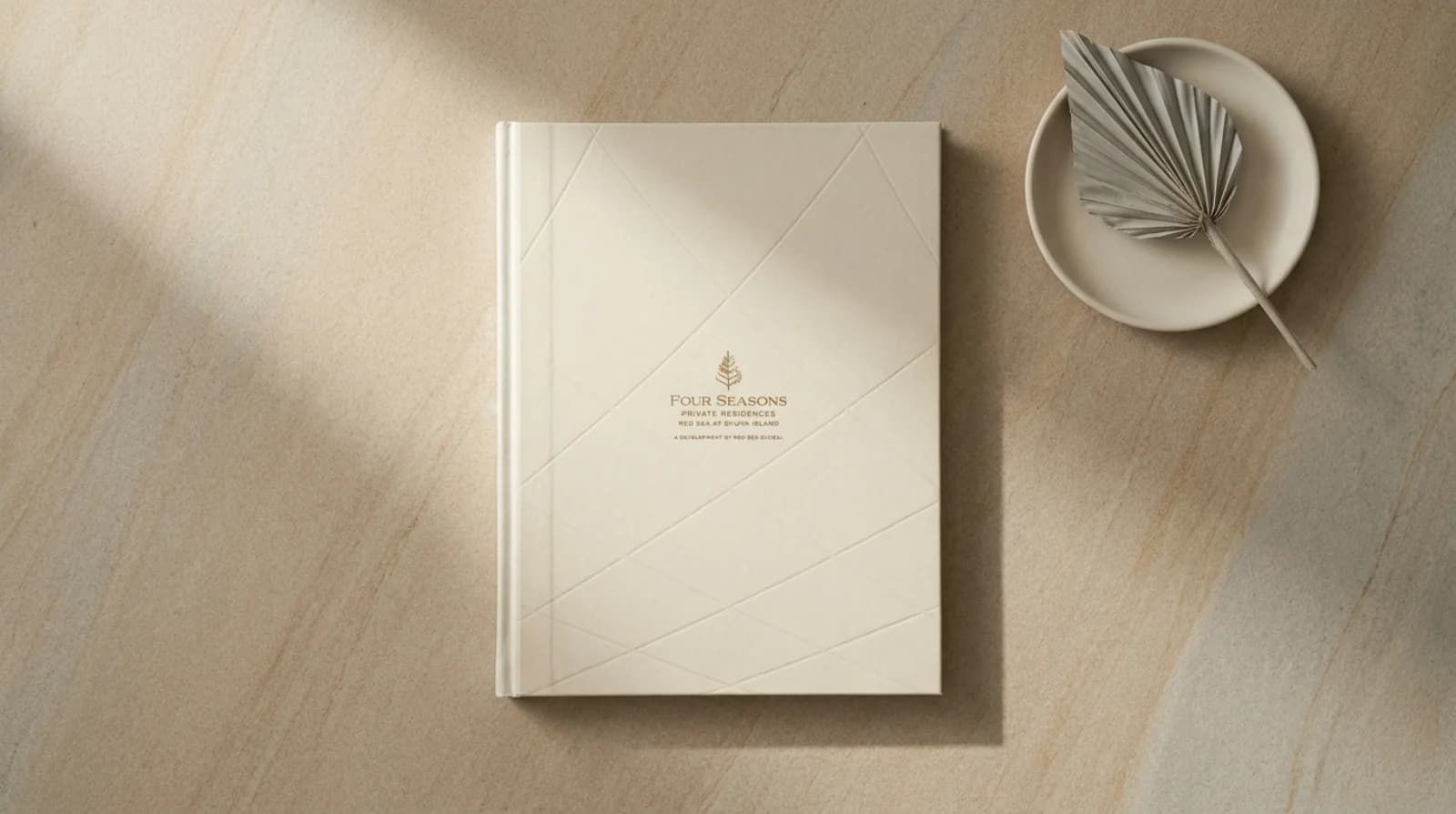
Finishing mostly does not care which press printed the sheet: foil, embossing, spot UV, lamination, die-cutting and binding follow either method. Foil and embossing need a die made for your artwork, the same setup for fifty invitations as for five thousand; on very short runs, digital embellishment can add foil and raised spot UV without one.
Personalisation: names, numbers and QR codes
Variable data is where digital has no competition. Every copy can carry its own name, title, serial number or QR code from a spreadsheet: invitations addressed to each guest, certificates named and numbered for each graduate, a commemorative edition numbered on its colophon, event badges with a QR code for entry.
A common hybrid gets both strengths: print the shell offset (design, Pantone border, gold foil) in one larger run, then overprint names digitally in batches as the guest list changes. Keep the name area clear of foil. For Arabic names, send a UTF-8 spreadsheet checked by whoever owns the list, and proof the longest name with its honorific in both languages before the batch runs.
Speed and timelines
Digital is faster on press: no plates, no make-ready, no drying. But on most corporate jobs press time is not what sets the date. Proofs, approvals, finishing, binding and delivery do, and a thread-sewn hardcover takes longer than a stapled brochure whichever press printed it. Plan back from the day you need it in hand, allow for one physical proof, and give the final quantity and addresses at the start. Vista confirms the timeline with every quote.
Which method for which product
| Product | Usual choice | Why |
|---|---|---|
| Business cards | Digital | Small runs, a different name per person. Offset only for big identical runs or a metallic ink. |
| Brochures and flyers | Digital short, offset long | Quantity decides. Event brochures that change every time stay digital. |
| Company profiles | Offset main run, digital updates | Premium paper and exact brand colour favour offset; quarterly updates favour digital. |
| Annual reports | Offset | Hundreds to thousands of identical copies, consistent colour. Board copies can run digitally first. |
| Hardcover books | Set by quantity | Vista’s minimum is 100 copies. Near it, digital pages often make sense; offset takes over in the hundreds. Thread-sewn binding and the case are the same either way. |
| Invitations | Digital, or offset shell plus digital names | Guest names need digital. Foil, embossing and heavy board come in finishing. |
| Notebooks and diaries | Offset inner pages | Ruled or dated pages repeat in every copy; names on covers are added piece by piece. |
| Calendars | Offset for large runs | Twelve or more pages per copy, so larger runs reward offset early. |
| Roll-ups, banners, exhibition graphics | Wide-format digital | Offset sheets stop well short of banner sizes; these print on wide-format inkjet and UV machines. |
Printing in Saudi Arabia: what to plan for
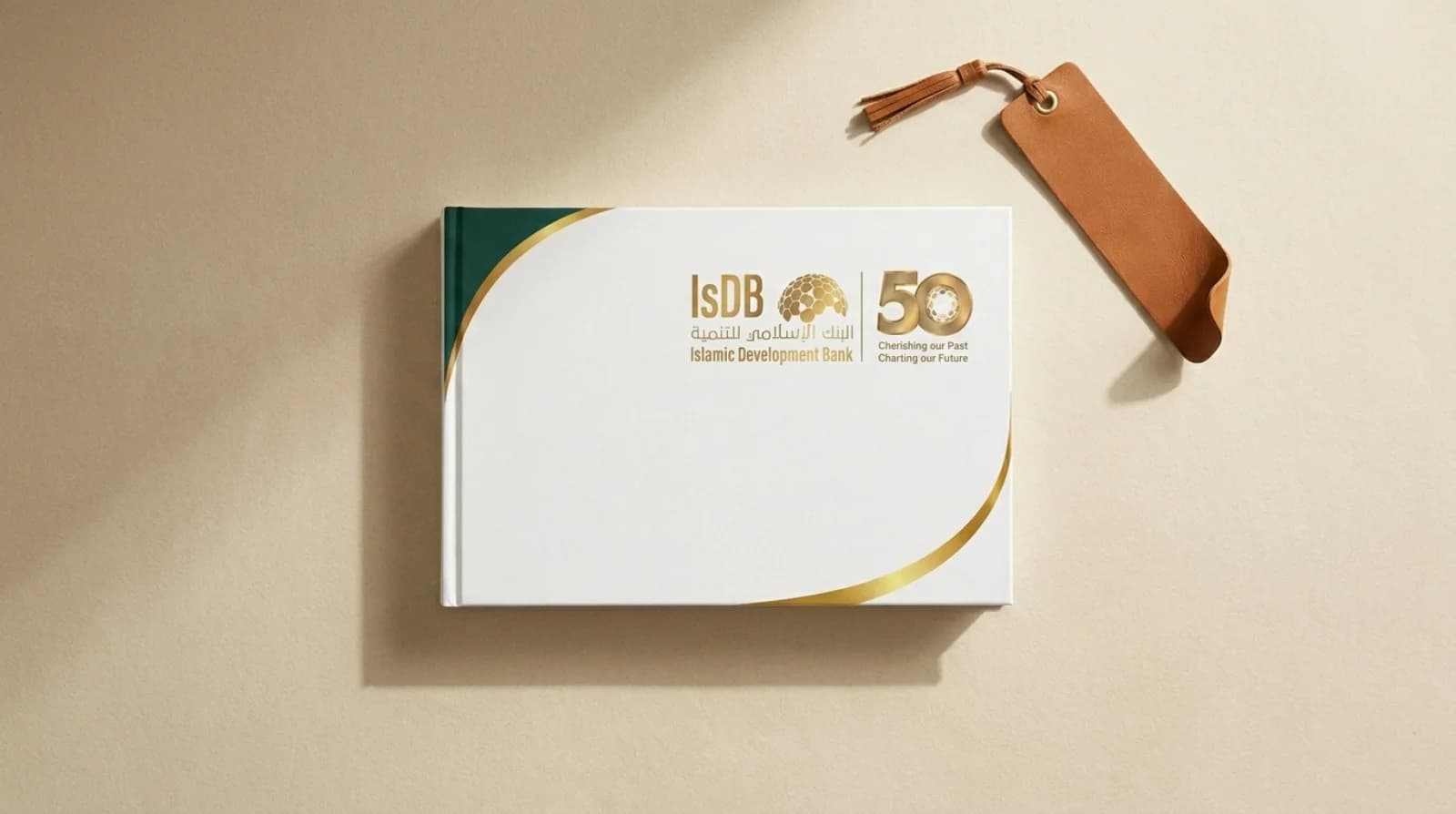
Bilingual layouts. Much of the corporate print in the Kingdom carries both Arabic and English, and Arabic changes the layout, not just the text. An Arabic-first document binds on the right and its pages run the other way. Bilingual reports take one of three shapes: two editions, side-by-side columns, or a flip book where English opens from one cover and Arabic from the other. Decide before design starts; it sets the page count, the imposition and the spine.
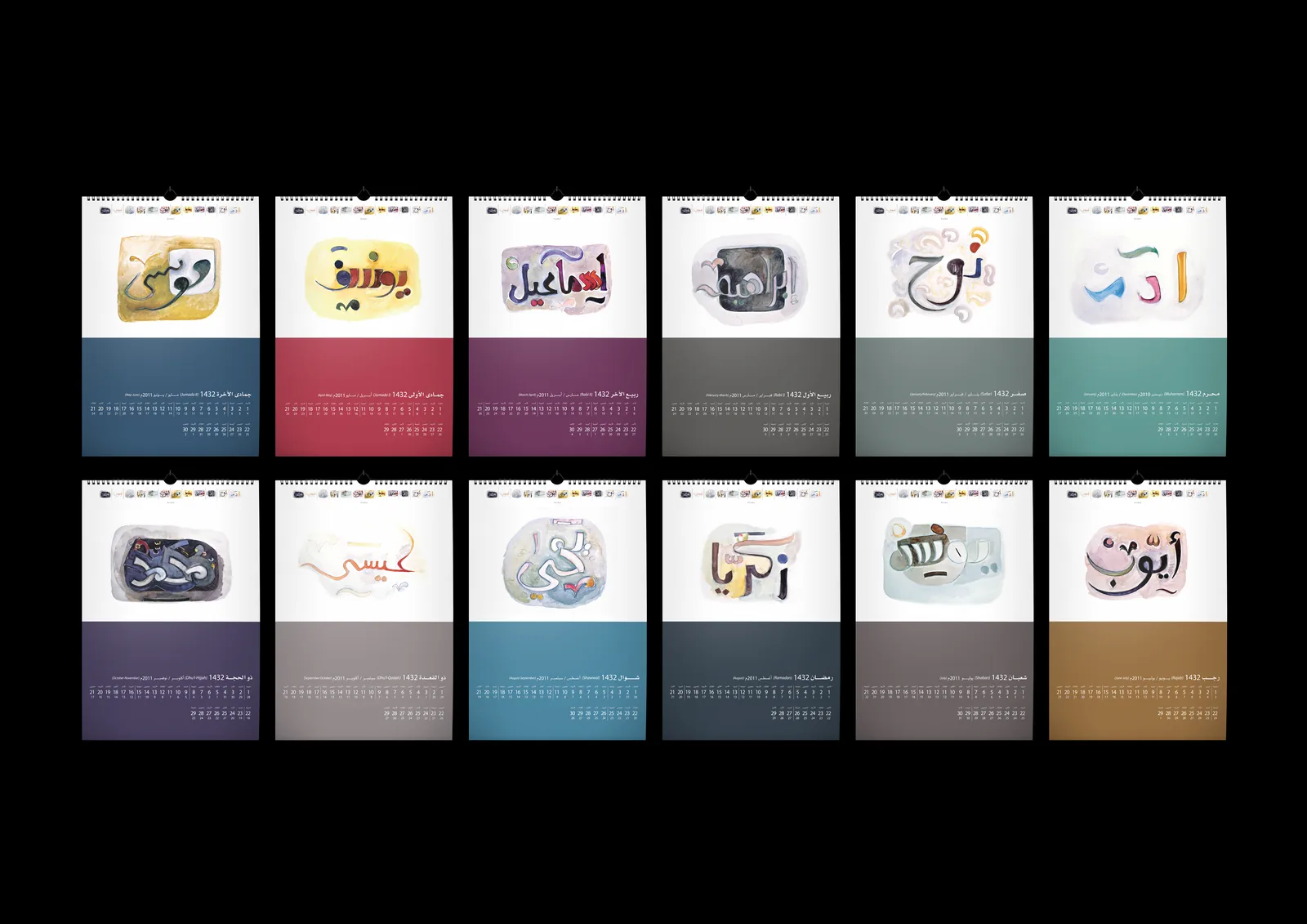
Hijri and Gregorian dates. Calendars and diaries for the Saudi market show both systems, and the months do not line up, so each page carries two sets of dates. Check every date against the official Umm al-Qura calendar before printing; on offset, a date error means reprinting the run.
Seasonal rushes. Capacity tightens before Ramadan, before National Day on 23 September, and at year end, when calendars, diaries and annual reports go to press together. Ramadan 1448 is expected to begin in early February 2027, so this cycle the year-end and Ramadan rushes overlap. Brief early and lock paper and finishing before the queue forms.
Delivery across cities. If a report ships to head office in Riyadh and to branches in Jeddah and Dammam, say so at quote stage, so cartons are packed per address and each city gets its own delivery date.
Press-ready file checklist
| Check | What to send |
|---|---|
| File format | PDF/X-1a or PDF/X-4, whichever the printer asks for, pages in reading order. |
| Bleed | 3 mm wherever colour runs to the trim, crop marks outside the bleed. |
| Safe margin | Text and logos 3 to 5 mm inside the trim, more near a thick book’s spine. |
| Colour mode | CMYK. Keep a Pantone swatch only if the job prints with that ink. |
| Images | 300 ppi at final size. Large format needs less, as it is read from a distance. |
| Black | Small text in 100% black only; rich black for large solid areas. |
| Fonts | Every font embedded, or outlined where the licence blocks embedding. |
| Spine | From the final page count and paper, confirmed by the printer. |
| Proof | A signed physical proof for colour-critical work, kept for reprints. |
Arabic text, the usual failures: letters printing disconnected or in reverse order mean the layout software or the PDF export did not handle Arabic shaping. Use a layout tool with full right-to-left support (in InDesign, the World-Ready Paragraph Composer), embed every Arabic font, and check the exported PDF, not the design file. Small Arabic text reversed out of a four-colour background can fill in around its dots, so set it on a single solid colour. And choose Arabic-Indic (١٢٣) or Western (123) digits once, then stick to them.
What drives the cost
Two quotes only compare when the specification is identical. These move the number, roughly in order of weight:
| Factor | How it moves the cost |
|---|---|
| Quantity | Decides the method. Offset spreads its setup over the run; digital stays roughly flat. |
| Pages and size | More pages and odd sizes mean more sheets, plates and passes. |
| Paper | Weight, coating and texture; imported specialty papers add lead time. |
| Inks | Each Pantone or metallic ink adds a plate and a press unit on offset. |
| Finishing | Foil, embossing and die-cuts need a die; lamination and spot UV add steps. |
| Binding | Stapled, then perfect bound, then thread-sewn hardcover. |
| Personalisation | Set by how many items carry a name or number. |
| Changes | A change after plates are made means new plates. |
| Packing and delivery | Per-copy wrapping, envelopes, deliveries split across cities. |
Line quotes up on the same quantity, paper, finish, binding, delivery and VAT treatment; the lowest number is often the one that left something out. If your job runs on the west coast, our guide to choosing a printing press in Jeddah covers what to check in a supplier. For a quote on your own specification, see Vista’s printing services in Riyadh.
Questions buyers ask
Is offset printing better quality than digital printing? Not across the board. On a full-colour brochure on coated paper, most readers will not see a difference. Offset leads on exact Pantone and metallic colours, uncoated and textured papers, and consistency over very long runs; digital leads on personalisation and short runs.
At what quantity does offset become cheaper than digital? It depends on the format. For folded brochures the crossing usually sits between 500 and 2,000 copies; for multi-page documents such as profiles and books it comes earlier. In that range, ask for both.
Can digital printing match our Pantone brand colour? Often closely, not always exactly. Deep blues, bright oranges and metallics usually shift. Approve a printed proof on the final paper, or print offset with the spot ink.
What is the minimum order for printed books at Vista? 100 copies. Brochures, profiles, business cards and invitations for companies have no fixed minimum; the quantity decides whether they run digital or offset.
Do you deliver outside Riyadh? Yes. Vista delivers across Saudi Arabia, including Jeddah and Dammam, and can split one order across several addresses when the split is known at quote stage.
“Quantity picks the press. Colour and paper confirm it.”